


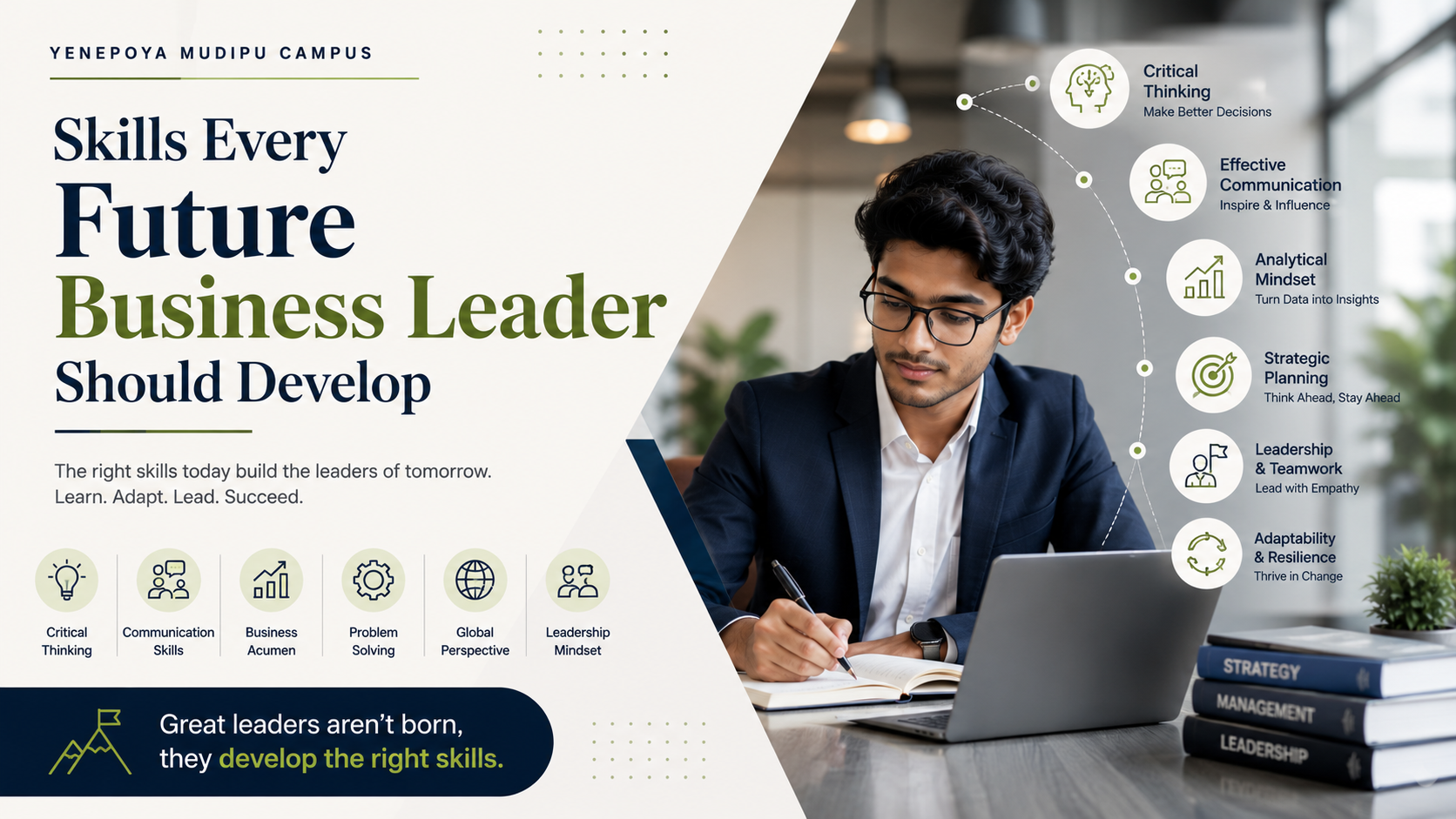
The driving force of any successful organization is its leadership. Technical knowledge matters, but future business leaders also need a broad set of human, analytical, ethical, and adaptive capabilities.
Nine skills to develop over time
Strategic Thinking and Decision Making
Strategic thinking can be developed through practice: analyze situations, understand how they connect, and consider how decisions affect the organization. Leaders must often decide without perfect information.
Emotional Intelligence
Leaders with strong EQ manage their own emotions, understand others, motivate diverse teams, build positive relationships, strengthen culture, and support retention.
Communication
Ideas create impact only when communicated clearly. Leaders must adapt messages for different audiences and listen carefully enough to understand their teams and stakeholders.
Adaptability and Resiliency
Future leaders must remain flexible through change, uncertainty, failure, and adversity. Resilience makes it possible to learn, adjust, and keep moving rather than becoming fixed on one approach.
Financial and Data Literacy
Leaders should understand budgets and profit margins, interpret data, and use analytical evidence in decisions—even when specialists handle detailed accounting or analysis.
Collaboration and Team Building
Strong leaders bring different people together, distribute work effectively, motivate teams, and manage disagreement constructively so it contributes to better solutions.
Ethical Judgment
Socially conscious stakeholders expect responsibility and accountability. Leaders need strong principles and an understanding of how decisions affect different groups, reputation, and trust.
Technological Competence
Leaders do not need to be specialists in every tool, but they must understand how technology changes their field, their teams, and the way organizations create value.
Continuous Improvement and Learning
A growth mindset means committing to lifelong learning, refreshing existing skills, acquiring new ones, and remaining open to lessons from subordinates, peers, and mentors.
Effective leadership needs balance
Understand the business
- Strategy
- Finance
- Data
- Technology
- Decision-making
Bring people with you
- Communication
- Emotional intelligence
- Collaboration
- Resilience
- Ethical judgement
Leadership develops through experience
Students and young professionals do not need every skill immediately. The best approach is to seek new experiences, reflect on them, and keep learning. A great strategy still needs communication, ethics, judgement, and a team capable of carrying it forward.
